


OSCAR Coaching Model
In today’s dynamic business environment, managers and team leaders are expected to do more than simply supervise tasks. They are required to develop people, support performance, encourage accountability, and help team members reach their full potential. One of the most effective approaches for achieving this is coaching.
Among the various coaching frameworks available, the OSCAR Coaching Model stands out as a practical and solution-focused methodology that helps individuals identify opportunities, take ownership of their development, and achieve meaningful results.
What is the OSCAR Coaching Model?
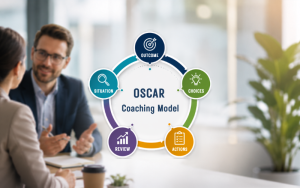
The OSCAR Model is a structured coaching framework developed to support workplace coaching and professional development. Unlike traditional problem-focused approaches, OSCAR encourages individuals to concentrate on solutions, possibilities, and future success. The acronym OSCAR stands for: O – Outcome S – Situation C – Choices A – Actions R – Review By guiding individuals through these five stages, coaches and leaders can facilitate productive conversations that lead to clarity, commitment, and positive change.Outcome: Defining Success
The coaching conversation begins by identifying the desired outcome. The individual is encouraged to clearly define what success looks like and what they hope to achieve. Questions may include:- What would you like to accomplish?
- What does success look like?
- How will you know you have achieved your goal?
Situation: Understanding the Current Reality
Once the goal is established, attention shifts to the current situation. This stage focuses on understanding where the individual stands today, including challenges, strengths, and available resources. Questions may include:- What is happening right now?
- What factors are influencing the situation?
- What strengths can you leverage?
Choices: Exploring Possibilities
The next stage encourages creative thinking and exploration of options. Rather than focusing on obstacles, individuals are encouraged to identify possible solutions and alternative approaches. Questions may include:- What options are available?
- What could you do differently?
- What resources or support could help?
Actions: Committing to Progress
Ideas alone do not create results. The Actions stage focuses on turning decisions into practical steps. Questions may include:- What specific actions will you take?
- When will you start?
- What milestones will indicate progress?
Review: Reflecting and Learning
The final stage involves reviewing progress, evaluating results, and identifying lessons learned. Questions may include:- What worked well?
- What challenges did you encounter?
- What would you do differently next time?
Why is the OSCAR Model Effective?
The OSCAR Model is particularly valuable because it is simple, practical, and highly adaptable. It promotes solution-focused thinking, encourages personal responsibility, and helps individuals develop confidence in their ability to overcome challenges. For managers and team leaders, OSCAR provides a structured framework for conducting meaningful coaching conversations that improve performance, strengthen engagement, and support employee growth.Conclusion
Organizations that develop a coaching culture often experience stronger leadership, improved communication, and higher levels of employee performance. The OSCAR Coaching Model offers a powerful yet practical approach for helping individuals move from where they are today to where they want to be tomorrow. By focusing on outcomes, exploring possibilities, and committing to action, leaders can empower their teams to achieve sustainable success while fostering a culture of continuous learning and development. Discover how our coaching services can help you improve performance, strengthen leadership skills, and achieve meaningful results. View our coaching services here.